




Acute Ischemic Stroke is a medical emergency caused by a sudden narrowing or blockage of a blood vessel supplying the brain. It is one of the leading causes of long-term disability and death. Every minute matters, as millions of brain cells can be permanently damaged when blood flow to the brain is interrupted.
To enhance treatment outcomes and increase patients’ chances of survival and recovery, Thonburi Thawiwatthana Hospital provides Mechanical Thrombectomy, an advanced minimally invasive procedure designed to rapidly and precisely restore blood flow to the brain.
What Is Mechanical Thrombectomy?
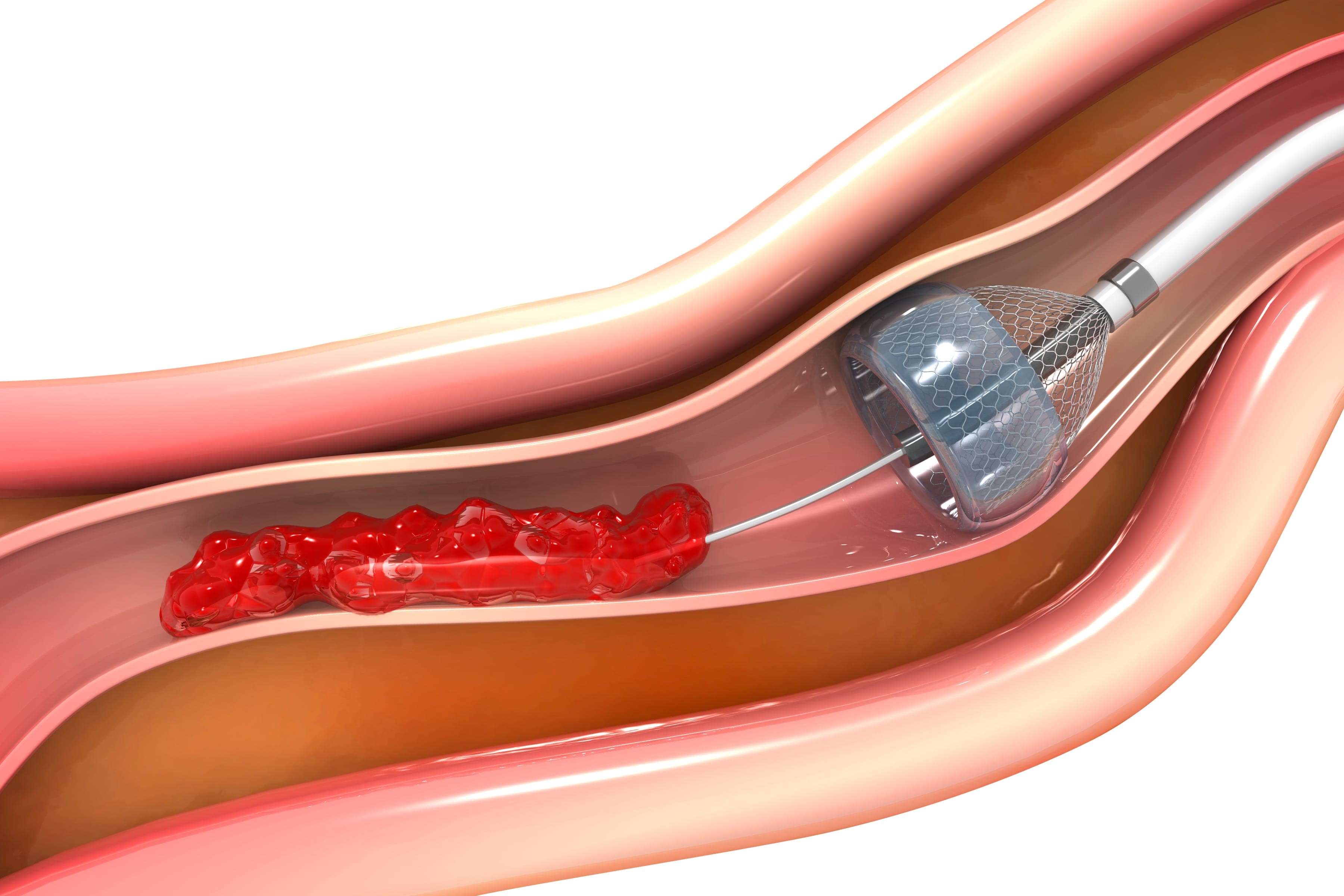
Mechanical Thrombectomy (MT) is a minimally invasive procedure used to treat patients with acute ischemic stroke caused by a blood clot blocking a major blood vessel in the brain.
A specialized doctor inserts a small catheter through a blood vessel, commonly through the groin, and carefully guides it to the site of the blockage in the brain. Specialized devices, such as a stent retriever or an aspiration catheter, are then used to capture or suction out the blood clot and restore blood flow.
Benefits of Mechanical Thrombectomy
Rapidly restores blood flow : Helps return blood supply to brain tissue as quickly as possible.
Reduces the risk of death and disability : Can improve the likelihood of functional recovery and help patients regain greater independence.
Targeted and effective treatment : Particularly beneficial for patients with large-vessel occlusion, especially when intravenous clot-busting medication may not be sufficient or may not be appropriate.
Who May Be Eligible for Mechanical Thrombectomy?
Eligibility for Mechanical Thrombectomy is determined by a specialist team based on the patient’s symptoms, brain imaging, overall condition, and time since symptom onset. Potential candidates may include:
Patients with large-vessel occlusion in the brain.
Patients who have received intravenous clot-busting medication but continue to have significant symptoms.
Patients who have contraindications to intravenous thrombolytic therapy.
Selected patients who present within up to 24 hours of symptom onset, depending on clinical and imaging criteria.
24-Hour Stroke Referral and Treatment System
Thonburi Thawiwatthana Hospital is equipped with a multidisciplinary team, including neurosurgeons, neurologists, anesthesiologists, operating room personnel, a Cath Lab, and ICU/CCU facilities to support stroke patients around the clock, including both emergency cases presenting directly to the hospital and patients transferred from network hospitals.
Treatment Process
Rapid assessment : Patients may undergo CT angiography (CTA) of the brain or MRI/MRA of the brain, as appropriate, to identify the location and extent of the blood vessel blockage.
Specialist evaluation: The neurosurgical and neurological teams assess the patient, determine whether Mechanical Thrombectomy is appropriate, develop a treatment plan, and communicate closely with the patient’s family.
Post-procedure care : Following the procedure, patients receive close monitoring in the ICU, together with appropriate rehabilitation and ongoing neurological care.
Recognize the Warning Signs: “B E F A S T” — Don’t Wait!
B – Balance: Sudden dizziness, loss of balance, difficulty walking, or unsteadiness.
E – Eyes: Sudden blurred or double vision, or sudden loss of vision.
F – Face: Facial drooping, an uneven smile, or one side of the face becoming weak.
A – Arm: Sudden weakness or numbness of an arm or leg, particularly on one side of the body.
S – Speech: Slurred speech, difficulty speaking, difficulty finding words, or difficulty understanding speech.
T – Time: If even one of these symptoms occurs suddenly, seek emergency medical attention immediately. Every minute counts.
(Mechanical Thrombectomy services for acute stroke are available 24 hours a day.)
For More Information or Emergency Referral : Thonburi Thawiwatthana Hospital
Brain and Neurology Center Tel. 02-487-2100 ext. 1150, 1151
Emergency Department (ER) Tel. 02-487-2100 ext. 1000, 1010