



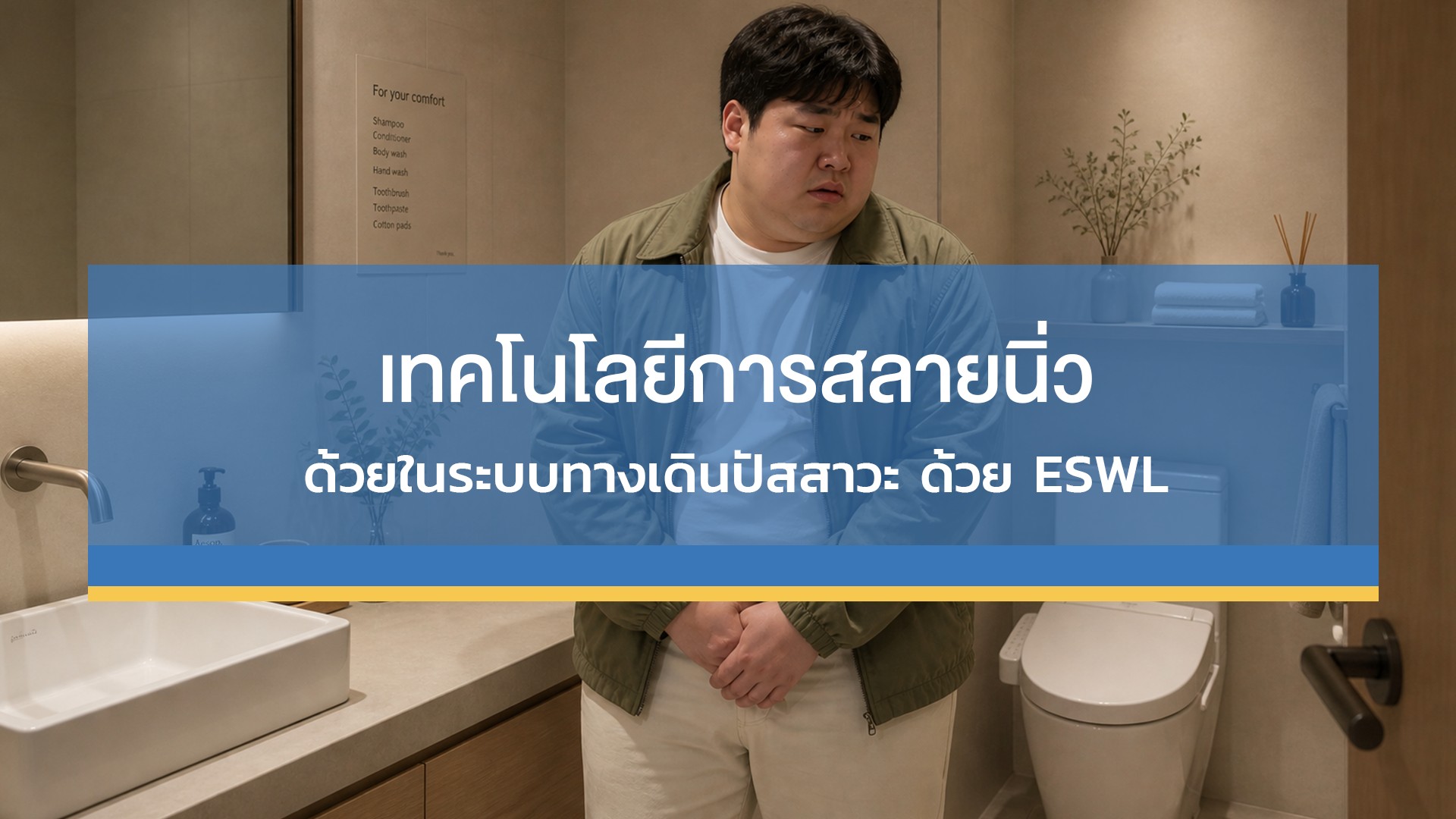
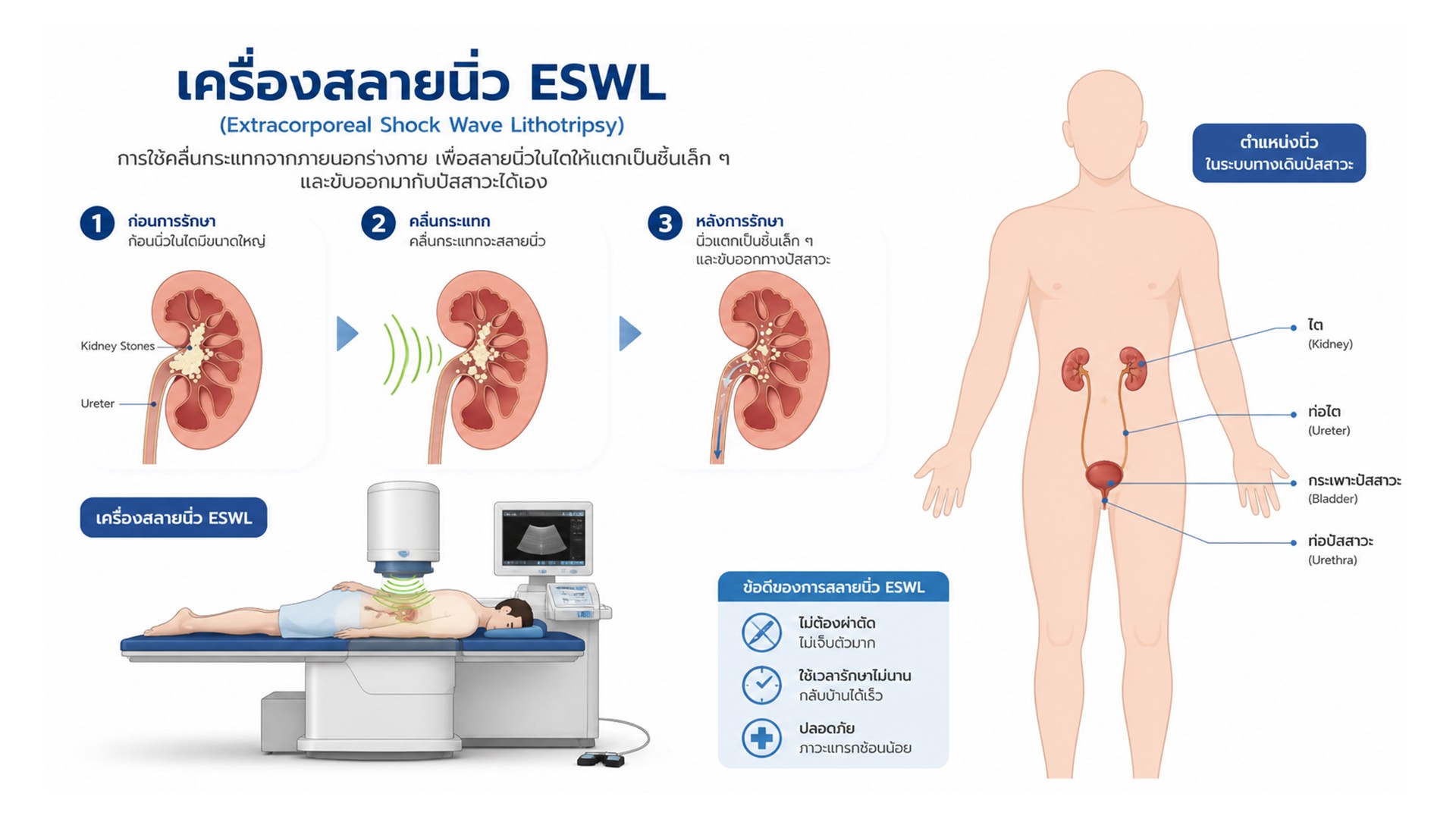
Extracorporeal Shock Wave Lithotripsy (ESWL) is a treatment technology for urinary stones in the kidneys and ureters. It uses high-energy shock waves generated outside the body and precisely directed at the stone to break it into small fragments, which can then be naturally passed through the urine. The key advantages of ESWL are that it does not require surgery, leaves no surgical incision, and most patients can return home to recover immediately after the procedure.
Habits That May Increase Your Risk of Developing “Kidney Stones”
Most risk factors for developing urinary stones are related to lifestyle and dietary habits that can cause urine to become highly concentrated, allowing crystals to form and eventually develop into stones. The following are some of the key harmful habits to be aware of:
Dietary Habits
Eating too much salt (high sodium intake) : Sodium can increase the amount of calcium excreted in the urine, resulting in higher urinary calcium levels and increasing the risk of calcium stone formation.
Consuming too many oxalate-rich foods : Examples include bamboo shoots, dark leafy greens (such as Piper sarmentosum leaves), and certain types of nuts. Excessive oxalate intake, particularly with inadequate dietary calcium, can bind with calcium in the urinary tract and contribute to stone formation.
Eating excessive amounts of red meat or organ meats : These foods are high in purines, which are metabolized into uric acid. High levels of uric acid in the urine can increase the risk of uric acid stones.
Having a strong preference for sweet foods and drinks : Fructose, which is commonly found in sugary beverages and soft drinks, can increase the excretion of calcium and uric acid in the urine, potentially increasing the risk of urinary stone formation.
Lifestyle Habits
Lack of physical activity: People who sit for long periods or are bedridden may experience increased calcium release from the bones into the bloodstream. Reduced mobility may also affect normal urinary tract function.
Not drinking enough water: This is one of the most important risk factors. When the body does not get enough fluids (less than approximately 1.5–2 liters per day), urine becomes more concentrated. Substances such as calcium, oxalate, and uric acid can then become more concentrated and are more likely to form crystals and eventually develop into urinary stones.
Other Contributing Factors
Excessive vitamin C supplementation : Taking high doses of vitamin C (more than 2,000 mg per day) may cause the body to excrete excess vitamin C as oxalate, potentially increasing the risk of stone formation.
Being overweight : Excess body weight is associated with changes in urine chemistry that may increase the likelihood of developing urinary stones.
Warning Signs That May Indicate the Presence of Urinary Stones
Sudden, severe pain: Sharp or intense pain in the lower back or flank that may radiate to the groin or abdomen.
Abnormal urine: Urine may appear red or pink due to blood in the urine, or become cloudy and dark in appearance.
Urinary tract infection: Fever and chills accompanied by painful or burning urination may indicate a urinary tract infection, which can sometimes occur along with urinary stones.
How Does ESWL Work? How Can It Break Up Kidney Stones Without Surgery?
ESWL technology uses a shock wave generator to deliver focused shock waves through the skin directly to the location of the stone. X-ray or ultrasound imaging is used to accurately locate and target the stone. The shock waves cause the stone to vibrate and break into tiny, sand-like fragments, which can then be naturally passed from the body through the urine.
ESWL is a specialized procedure that requires the expertise of a medical team and precise imaging technology. A urologist plays a key role in evaluating the patient, determining whether ESWL is appropriate, and overseeing the treatment.
Step 1 : Diagnosis
When a patient presents with back pain or abnormal urination, the doctor will perform diagnostic tests to confirm the location and size of the stone:
Urine and blood tests: To check for infection and assess kidney function.
Abdominal X-ray or CT scan: To determine the stone’s size and characteristics, including whether it is within a size range suitable for ESWL and whether its hardness is appropriate for shock-wave treatment.
Step 2 : Patient Selection
Not every patient is suitable for ESWL. The doctor will evaluate the following conditions:
No urinary tract obstruction below the stone: This allows stone fragments to pass out of the body more easily.
No abnormal bleeding or uncontrolled use of blood-thinning medication: Patients taking anticoagulants may need to stop or adjust these medications under medical supervision before treatment.
Not pregnant: ESWL is generally contraindicated during pregnancy.
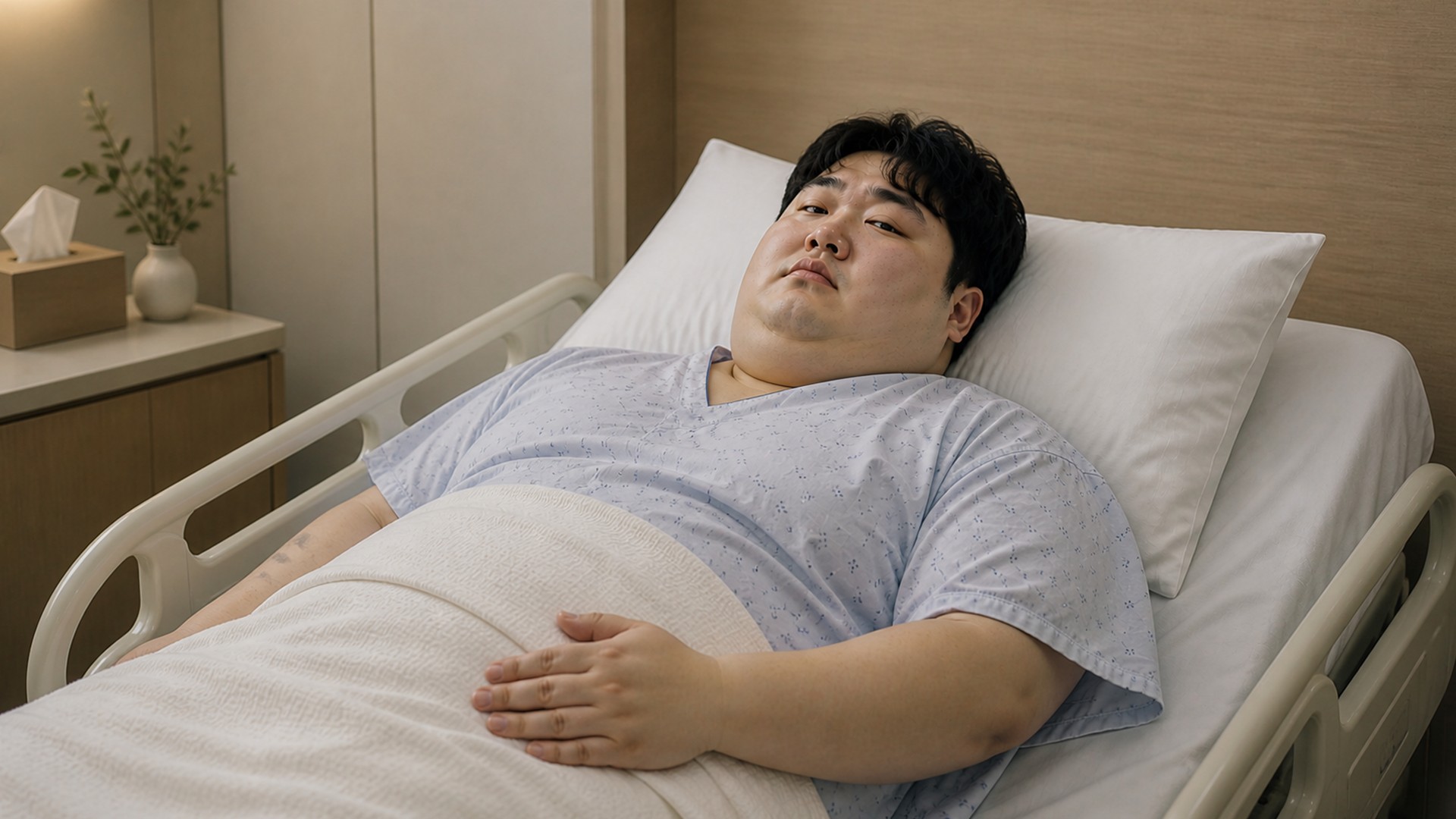
Before Treatment
Undergo a health assessment and kidney function tests as recommended by your doctor.
Inform your doctor in detail about any blood-thinning medications and other regular medications you are taking.
Fasting may not be required in some cases, depending on the treatment plan. Wear comfortable clothing.
On the Day of Treatment
You will lie on a specialized treatment table equipped with a shock wave generator.
The doctor will precisely position the device over the stone using X-ray guidance.
Shock waves will then be delivered from outside the body to the stone. You may feel a sensation similar to light tapping or flicking on the skin.
Follow-Up
In most cases, you can return home shortly after the procedure without staying overnight in the hospital.
Your doctor may schedule a follow-up X-ray or other imaging within 1–2 weeks to assess whether the stone has been successfully fragmented and passed.
After Treatment
Drink plenty of water (approximately 2.5–3 liters per day) : This may help flush the stone fragments out through the urine, unless your doctor has advised you to restrict fluids.
Monitor your symptoms : Mild pink or blood-tinged urine and a dull ache in the flank area may occur during the first 1–2 days.
Collect stone fragments : If you notice stone fragments in your urine, collect them and bring them to your doctor for stone analysis. This can help guide strategies to prevent future stones.
Avoid strenuous exercise and heavy lifting during the recovery period, as advised by your doctor.
Thonburi Thawiwatthana Hospital is committed to providing comprehensive care for patients with urinary stone conditions. We invite you to speak directly with our experienced urologists for personalized consultation and treatment planning. Our team combines specialized expertise with modern endoscopic technology to provide accurate and safe treatment under close medical supervision—from diagnosis through recovery. Because our goal is not simply to treat the condition, but to “design a treatment approach that best suits your lifestyle and individual needs.”