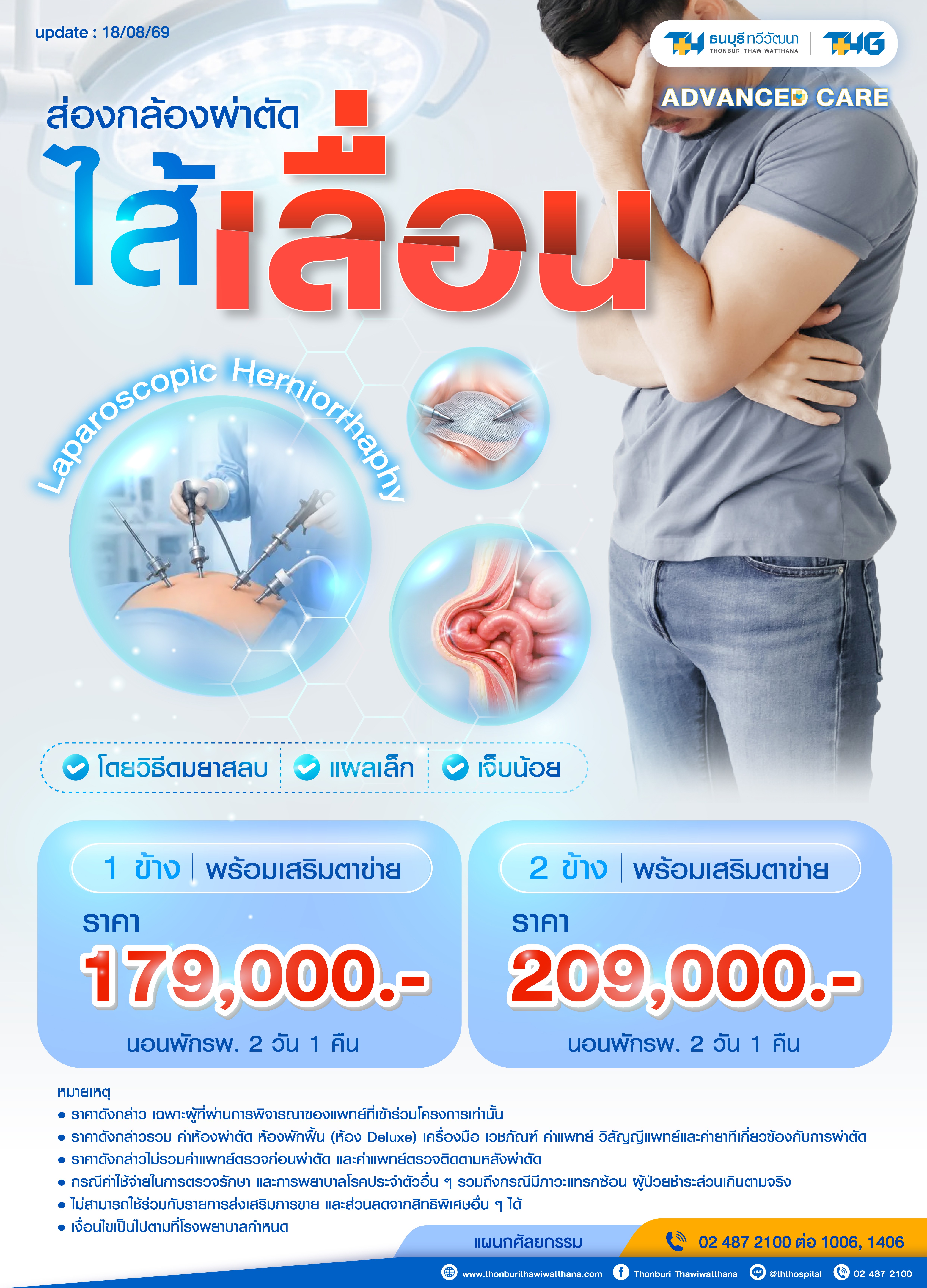





Laparoscopic Hernia Surgery by a Specialist Surgeon
A hernia is a condition in which an internal organ, most commonly the intestine, protrudes through a weak spot or opening in the abdominal wall, causing a noticeable bulge. The bulge may become more prominent when coughing, sneezing, or lifting heavy objects.
Although many people believe that hernias only affect men, women can develop hernias too. One of the current advanced treatment options is minimally invasive laparoscopic surgery (MIS), which involves smaller incisions and may allow for a faster recovery.
What is the difference between open hernia repair and laparoscopic hernia repair?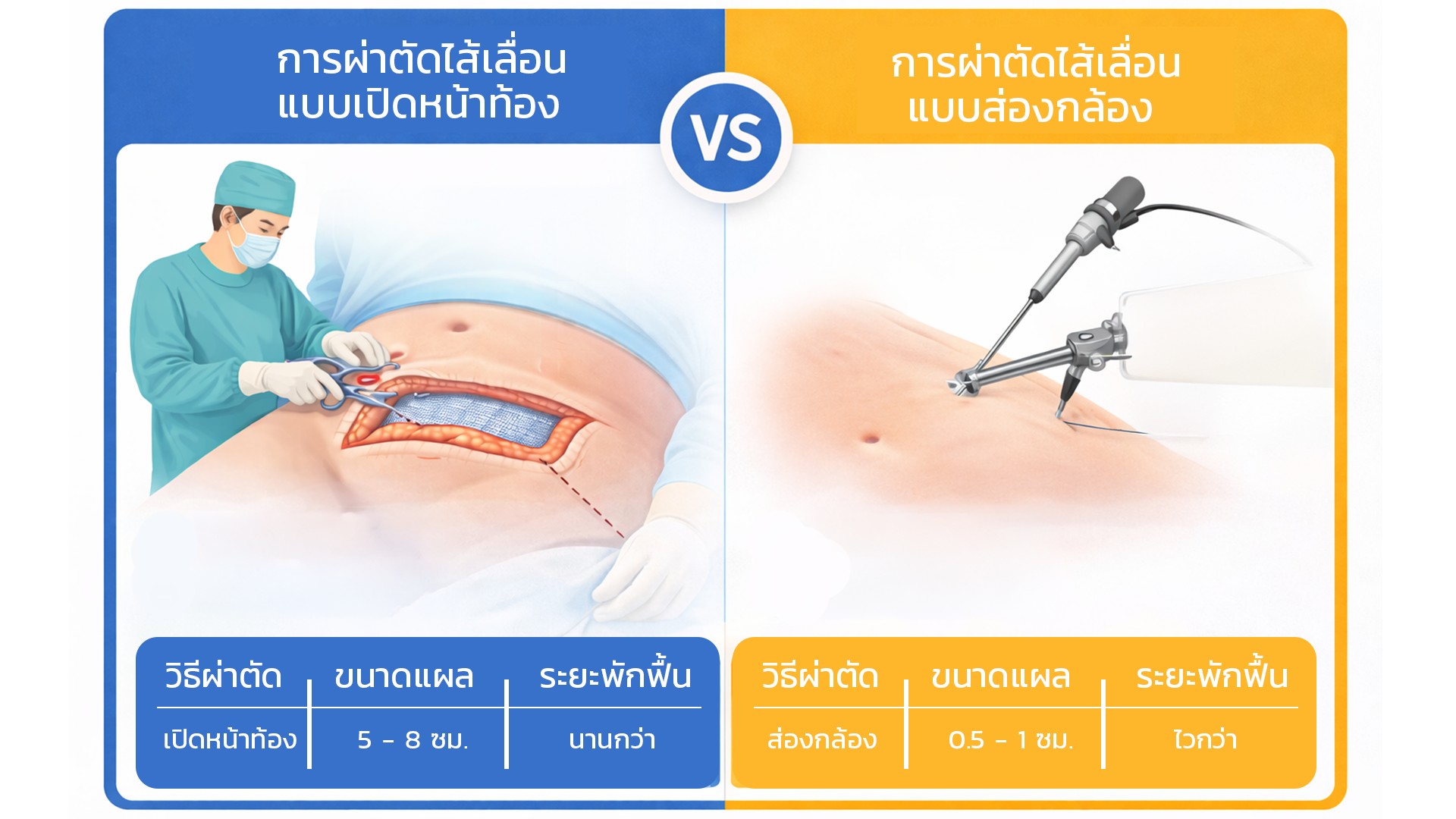
A hernia cannot be cured with medication. If the herniated tissue cannot be pushed back into its original position, the resulting bulge may gradually become larger and potentially lead to serious complications, such as intestinal obstruction or loss of blood supply to the intestine, which can cause the affected bowel tissue to become necrotic.
Therefore, patients with symptoms of a hernia should undergo a medical evaluation to determine whether immediate surgical treatment is necessary. Hernia repair can be performed using either open surgery or laparoscopic surgery.
Open Hernia Surgery
Open hernia repair involves repairing the hernia itself and, when necessary, reinforcing the abdominal wall either with sutures or surgical mesh. The surgeon makes a small incision of approximately 2–5 cm in the abdominal area to perform the procedure. One advantage of open hernia surgery is that local anesthesia can be used, making this approach suitable for patients with certain underlying medical conditions who may not be able to undergo general anesthesia or spinal anesthesia.
Laparoscopic Hernia Surgery (Laparoscopic Herniorrhaphy)
Laparoscopic hernia surgery can generally be performed using two approaches: transabdominal preperitoneal (TAPP) repair and totally extraperitoneal (TEP) repair.
The surgeon makes several small incisions, typically one incision of approximately 1.5 cm and two incisions of approximately 0.5 cm. The hernia sac is reduced back into the abdominal cavity, and a surgical mesh is placed over the weakened area and secured in position, often with fixation devices.
Because laparoscopic surgery causes less tissue trauma, it may help reduce postoperative pain, complications, and the formation of intra-abdominal adhesions. It may also reduce the risk of hernia recurrence.
Another advantage is that different types of inguinal hernias on the same side can be repaired during a single operation.
Patients typically stay in the hospital for approximately 1–2 days, although some may be able to return home on the same day after recovering from anesthesia and meeting the appropriate discharge criteria. Many patients can resume their normal daily activities within approximately one week, depending on their recovery and the nature of their work. If there is no significant wound pain, exercise or sports may generally be resumed after approximately 2–4 weeks, as advised by the surgeon.
Hernias Can Affect Both Men and Women and Can Occur in Different Areas of the Body
Many people believe that hernias occur only in men, particularly in the groin or scrotum. In reality, hernias can occur in both men and women and may develop in various areas of the body, including:
Inguinal hernia – commonly found in men and, in severe cases, may extend into the scrotum and become an inguinoscrotal hernia.
Femoral hernia – occurs below the groin and is more commonly seen in women.
Incisional hernia – develops at or near a previous surgical incision due to weakness of the abdominal muscles and connective tissue.
Umbilical hernia – occurs around the navel and is common in infants; many cases resolve naturally by around 2 years of age.
Epigastric hernia – occurs in the upper abdominal wall, typically above the navel.
Hiatal hernia – occurs when part of the stomach protrudes through an opening in the diaphragm.
Femoral hernia – occurs below the inguinal region and is more commonly found in women.
Internal pelvic hernia – occurs within the pelvic cavity and is more commonly seen in women.
In women, hernias may be associated with factors such as heavy lifting, previous abdominal surgery, or cesarean delivery. Pregnancy can also place increased pressure on the abdominal wall and may contribute to weakening of the abdominal muscles, potentially leading to a hernia.
What Are the Risk Factors for Developing a Hernia?
Several factors can increase the pressure inside the abdomen or weaken the abdominal wall, increasing the risk of developing a hernia:
Heavy lifting: Weightlifters and people whose jobs require frequent heavy lifting may be at increased risk.
Chronic coughing: Persistent coughing, particularly in heavy smokers or people with chronic respiratory conditions, repeatedly increases pressure inside the abdomen.
Straining during bowel movements or urination: Chronic constipation requiring frequent straining, as well as an enlarged prostate that causes difficulty urinating, can increase abdominal pressure.
Pregnancy: As the uterus grows during pregnancy, increased pressure within the abdomen and stretching of the abdominal wall may contribute to the development of a hernia.
Warning Signs That You May Have a Hernia
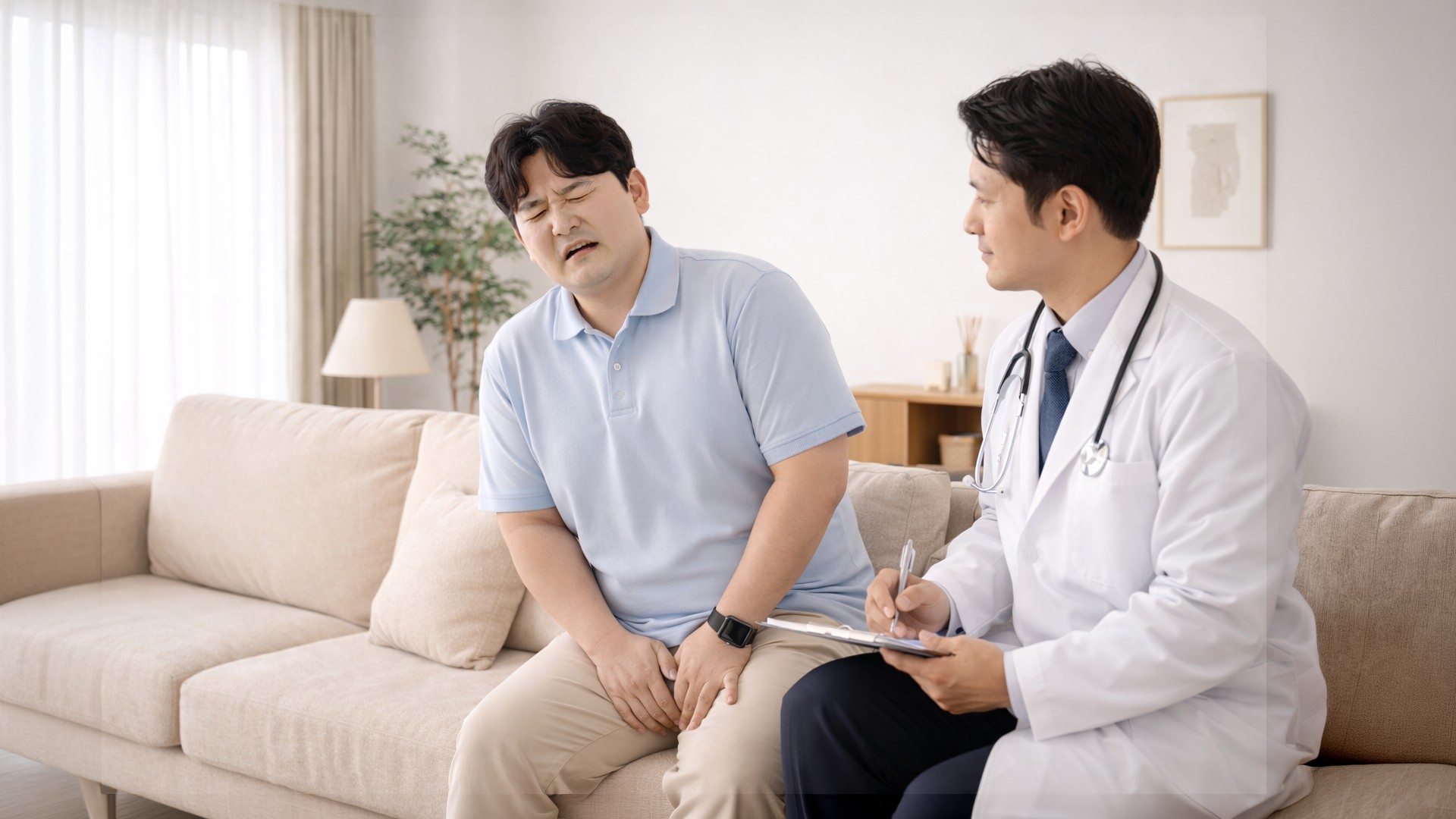
A hernia may occur in people with a weakened abdominal wall. This weakness may be present from birth or develop with age. Whenever daily activities cause increased pressure inside the abdomen, the pressure can push part of the intestine through the weakened area. In some cases, the protruding intestine may move back into the abdominal cavity on its own.
When part of the intestine protrudes through the abdominal wall, patients may experience a dull aching or painful sensation around the area of the hernia, particularly when standing or walking. On examination, a bulge may be felt or seen in the abdominal wall or groin. The bulge may disappear and reappear and often becomes more noticeable when straining, running, tightening the abdominal muscles, or lifting heavy objects. If the bulge protrudes and cannot return to the abdominal cavity on its own, pain may develop around the affected area. Some patients may also experience other symptoms, such as chest discomfort, abdominal pressure or bloating, or a burning sensation in the chest similar to acid reflux.
If the hernia causes the intestine to become obstructed, intestinal contents may no longer pass normally through the bowel. This can lead to intestinal obstruction, with symptoms such as cramping abdominal pain, nausea, vomiting, abdominal distension, and an inability to pass gas.
If the protruding intestine becomes trapped and its blood supply is cut off, the affected bowel tissue may die and become necrotic. Patients may develop severe abdominal pain and may be unable to move due to the pain. In some cases, low blood pressure may occur. This is a medical emergency requiring prompt medical treatment and, in some cases, urgent surgery.
Hernia Prevention
Hernias that are not caused by congenital abnormalities may potentially be prevented or their risk reduced by following these measures:
Maintain a healthy body weight.
Eat a high-fiber diet, including vegetables, fruits, and whole grains, to help prevent constipation and reduce straining during bowel movements or urination.
Avoid or take proper precautions when lifting heavy objects. Bend your knees and use your legs to lift rather than bending over and lifting with your back.
Treat chronic coughing appropriately and stop or avoid smoking, as smoking can contribute to persistent coughing and increased abdominal pressure.
Laparoscopic Hernia Surgery Package
Thonburi Thawiwatthana Hospital offers a comprehensive package for laparoscopic hernia surgery, providing patients with confidence and greater choice in their healthcare. The package is designed to provide accurate diagnosis, appropriate treatment, and cost-effective care.