





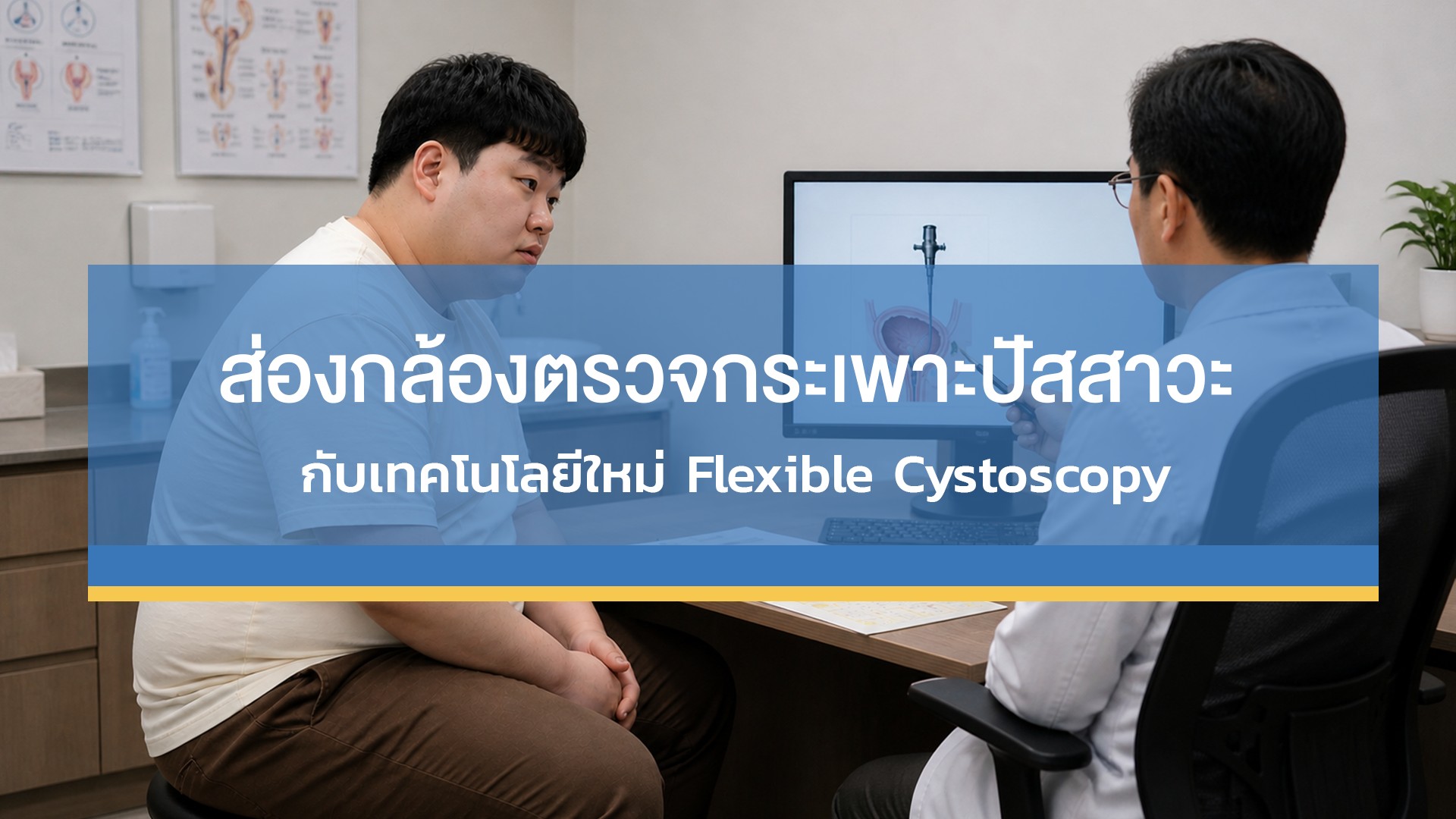
Flexible Cystoscopy is a diagnostic procedure that uses a thin, highly flexible scope inserted through the urethra to examine the inside of the bladder and urethra for abnormalities. The technology is designed to minimize anxiety and transform the traditional perception of urinary tract examinations into a procedure that is simple, less painful, and quick.
Key advantage: Patients generally experience significantly less discomfort compared with traditional rigid cystoscopy. General anesthesia is usually not required; the procedure can be performed using local anesthetic, and the examination typically takes only 5–10 minutes.
Flexible cystoscopy allows doctors to examine the urinary tract and help diagnose conditions such as urinary stones, bladder tumors, benign prostatic enlargement (BPH), and inflammation of the bladder with greater precision.
A New Standard in Urinary Tract Diagnosis
Flexible Cystoscopy combines diagnostic accuracy with greater patient comfort. It allows doctors to directly visualize the inside of the urinary tract through a high-resolution monitor, helping identify abnormalities in the lower urinary tract, including tumors. This can support faster and more targeted treatment planning.
For patients with painless blood in the urine (painless hematuria), cystoscopy can play an important role in identifying the underlying cause. It provides direct visualization of the bladder and may help detect bladder cancer at an early stage, particularly when used alongside other appropriate diagnostic tests such as imaging.
Note: The exact diagnostic accuracy and cancer detection rates vary depending on the patient population, diagnostic methods, and clinical setting.
What Symptoms May Indicate That Cystoscopy Could Help ?
Blood in the urine : Whether visible to the naked eye or detected as red blood cells during a routine urine test.
Persistent abnormal urination : Such as painful or burning urination, a feeling of incomplete bladder emptying, or unusually frequent urination that does not improve with medication.
Suspected urinary stones or tumors : If X-rays or ultrasound do not provide a clear diagnosis, your doctor may consider cystoscopy for a more detailed examination.
Follow-up after treatment : Cystoscopy may be used to monitor patients after treatment for bladder tumors and check for recurrence.
Who May Be at Higher Risk and Need Flexible Cystoscopy ?
Heavy smokers : Smoking is a major risk factor for bladder cancer.
People with occupational exposure to chemicals : Particularly those working with dyes, rubber, or certain industrial chemicals.
Men with an enlarged prostate and blood in the urine : Further evaluation may be recommended to determine the underlying cause.
People with a family history of urinary tract cancers : Additional evaluation may be considered based on individual risk factors.
What to Expect During a Flexible Cystoscopy
Before the Procedure
Fasting is generally not required when the examination is performed using local anesthetic only, unless otherwise instructed by your doctor.
Inform your doctor about any drug allergies and blood-thinning medications you are taking.
During the Procedure
The doctor will clean the urethral opening and apply a local anesthetic gel.
You may feel mild pressure or a sensation of tightness as the flexible scope passes through the urethra. The doctor will position you comfortably, and the examination usually takes only a few minutes.
After the Procedure
Drink plenty of water: This may help flush the urinary tract and reduce mild burning during urination.
Common temporary symptoms: Mild burning or discomfort when urinating and a small amount of pink-tinged urine may occur during the first few times you urinate. These symptoms typically resolve within about 24 hours.
Seek medical attention promptly if: You develop a fever, are unable to urinate, or experience significant or persistent bleeding.

What Can We Learn from a Flexible Cystoscopy?
1. Abnormalities Inside the Bladder
Inflammation: The doctor can examine the bladder lining for redness, swelling, or chronic inflammation and ulcers associated with cystitis.
Tumors: The procedure can help identify abnormal growths, including small lesions, which may be associated with blood in the urine (hematuria).
Bladder diverticula: The doctor can check for pouch-like outgrowths in the bladder wall that may become sites where bacteria or urinary stones accumulate.
2. Detection of Bladder Stones
Cystoscopy allows the doctor to directly identify whether bladder stones are present and assess their number, size, and appearance. This information can help guide the next step in treatment.
3. Checking for Urinary Tract Obstruction
In men, cystoscopy allows the doctor to assess the prostate and urethra, including:
Whether an enlarged prostate (Benign Prostatic Hyperplasia or BPH) is significantly narrowing the urethra.
Whether there is a urethral stricture, or narrowing caused by scar tissue, which can make urination difficult or cause incomplete bladder emptying.
4. Ureteral Orifices
The doctor can examine the openings where urine drains from both kidneys into the bladder.
Assess whether urine is flowing normally from each ureter.
Check for signs of blood or pus coming from either ureter, which may help determine whether the source of bleeding is more likely to be from the kidney or the bladder.
5. Bladder Capacity and Basic Function
During cystoscopy, sterile fluid may be introduced into the bladder to gently expand it. This can provide information about:
Whether the bladder appears to accommodate a normal volume of fluid.
Whether there are signs of bladder sensitivity or pain as the bladder fills.
Thonburi Thawiwatthana Hospital is committed to providing comprehensive care for patients with urinary tract conditions. Our team of experienced urologists is supported by modern endoscopic technology to provide accurate diagnosis and safe treatment, with close monitoring from diagnosis through recovery.
Our goal is not simply to treat the disease, but to “design a treatment approach that best fits your condition, lifestyle, and individual needs.”